Safe information to gather
- Describe the pattern: Note how long the water stays hot, whether the change happens at every fixture, and whether it began suddenly or gradually.
- Check another fixture: Compare two faucets without dismantling aerators, valves or plumbing. A concern isolated to one fixture may not originate at the tank.
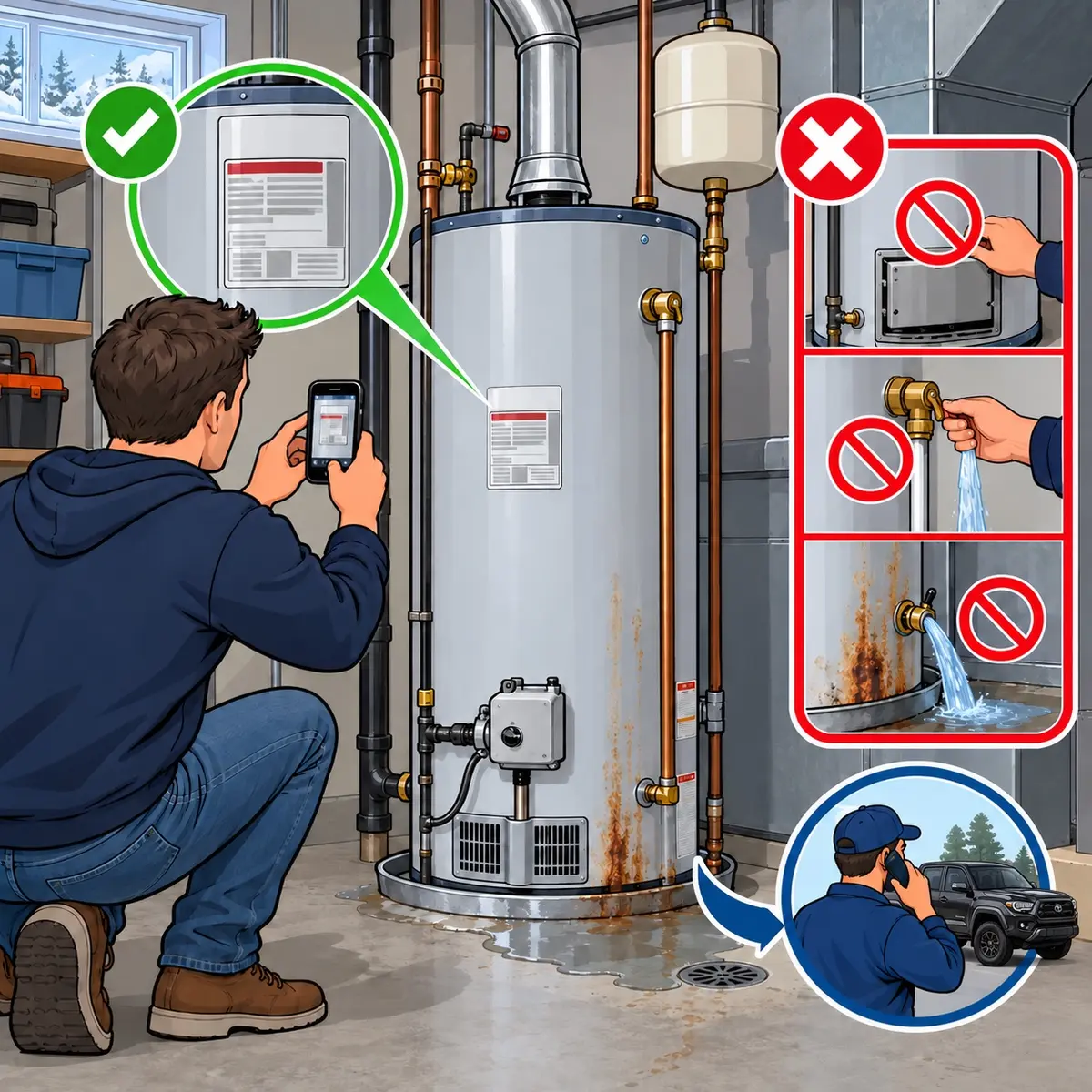
- Photograph the rating plate: Include the manufacturer, model and serial number. Also photograph the full installation from a safe distance.
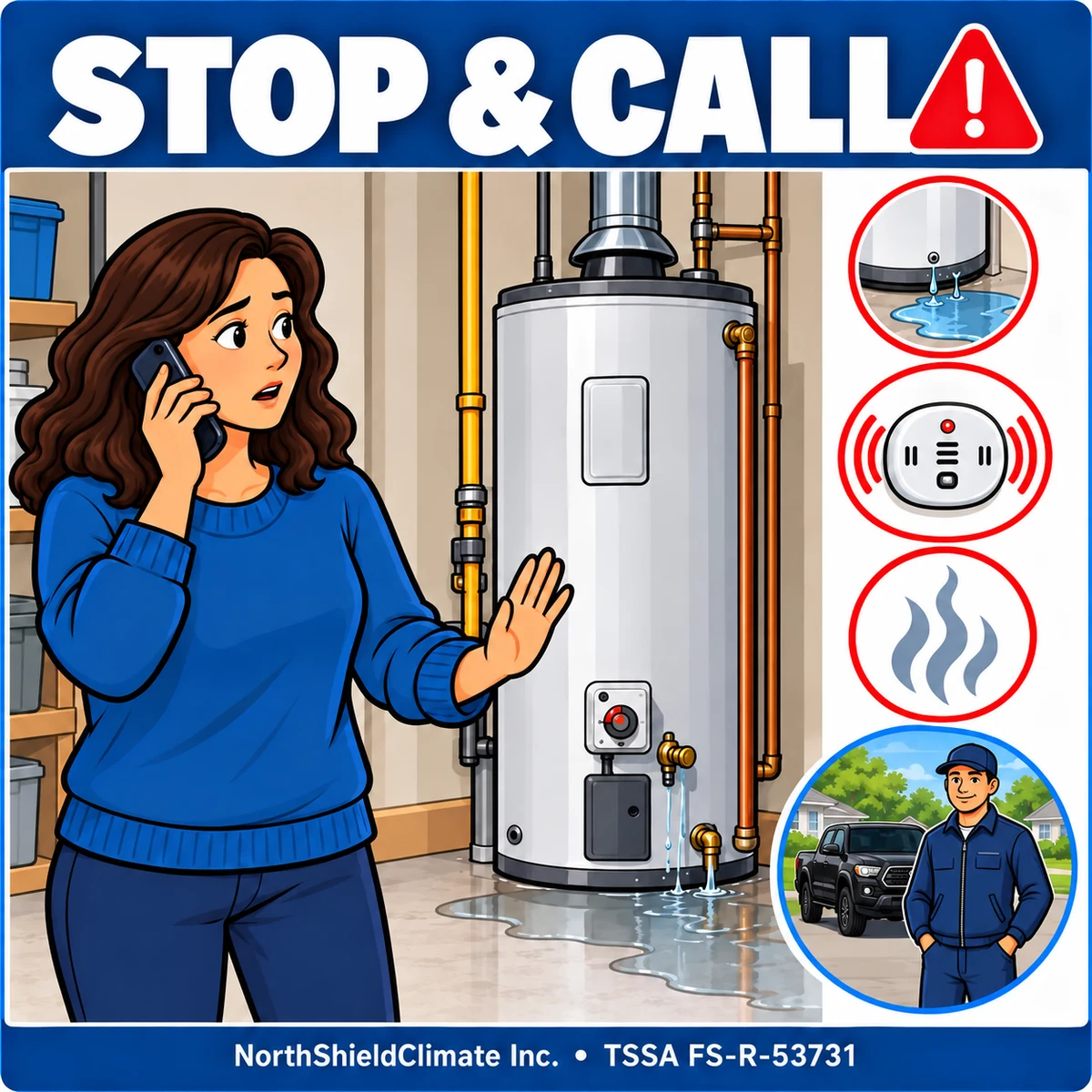
- Look for visible water: Without touching piping or controls, note whether water appears at the base, a connection or the discharge piping.
- Check visible surroundings: Keep stored material away from the appliance and make sure the lower air-intake area is not covered in dust, lint or belongings.
Possible causes require testing
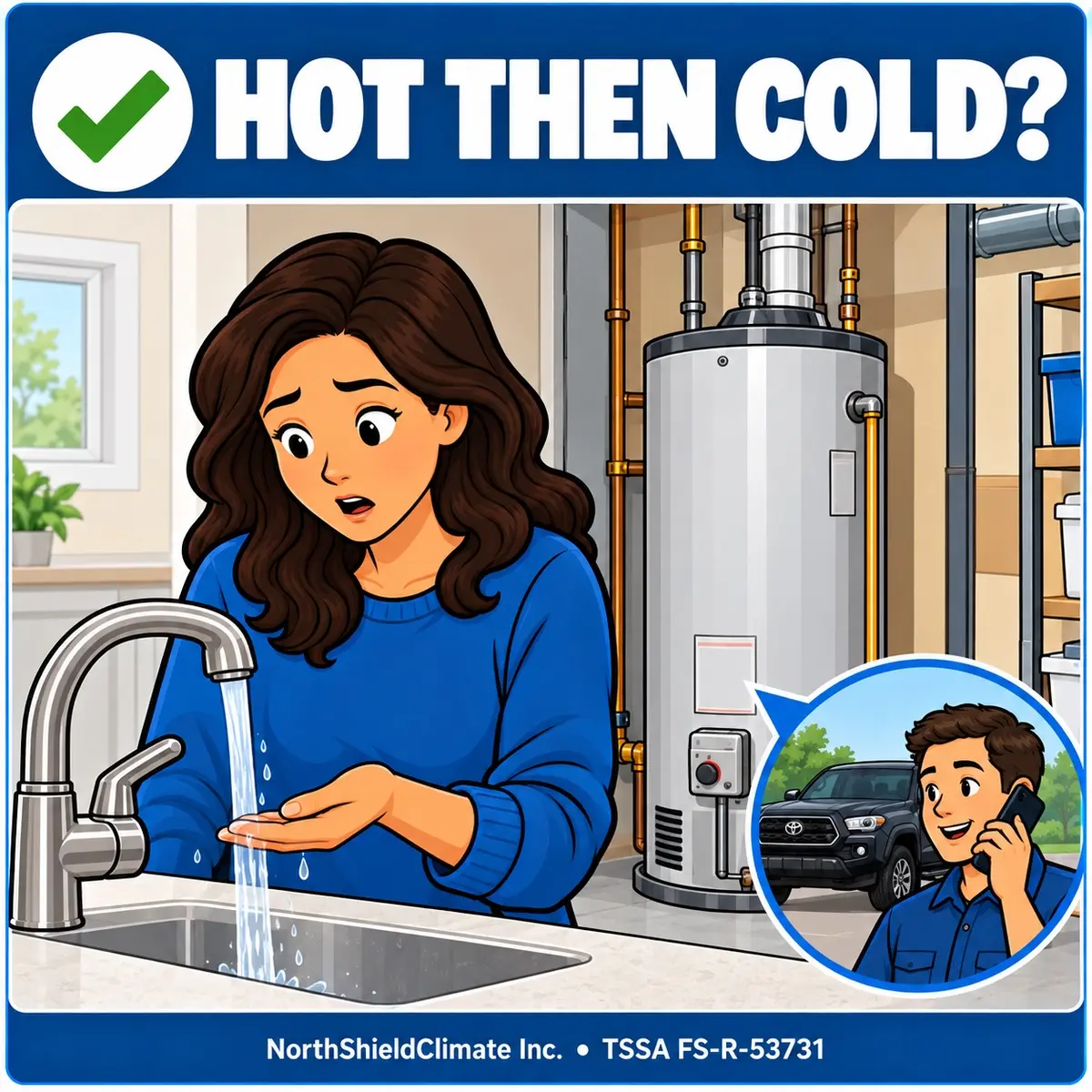
A broken or deteriorated dip tube can allow incoming cold water to mix near the top of the tank, shortening the useful hot-water draw. Other possibilities include sediment accumulation, incorrect temperature control, burner or element problems, a mixing valve concern, plumbing crossover, heavy demand or a tank that no longer meets the household load. A technician should test before recommending a repair.
Flushing and anode maintenance
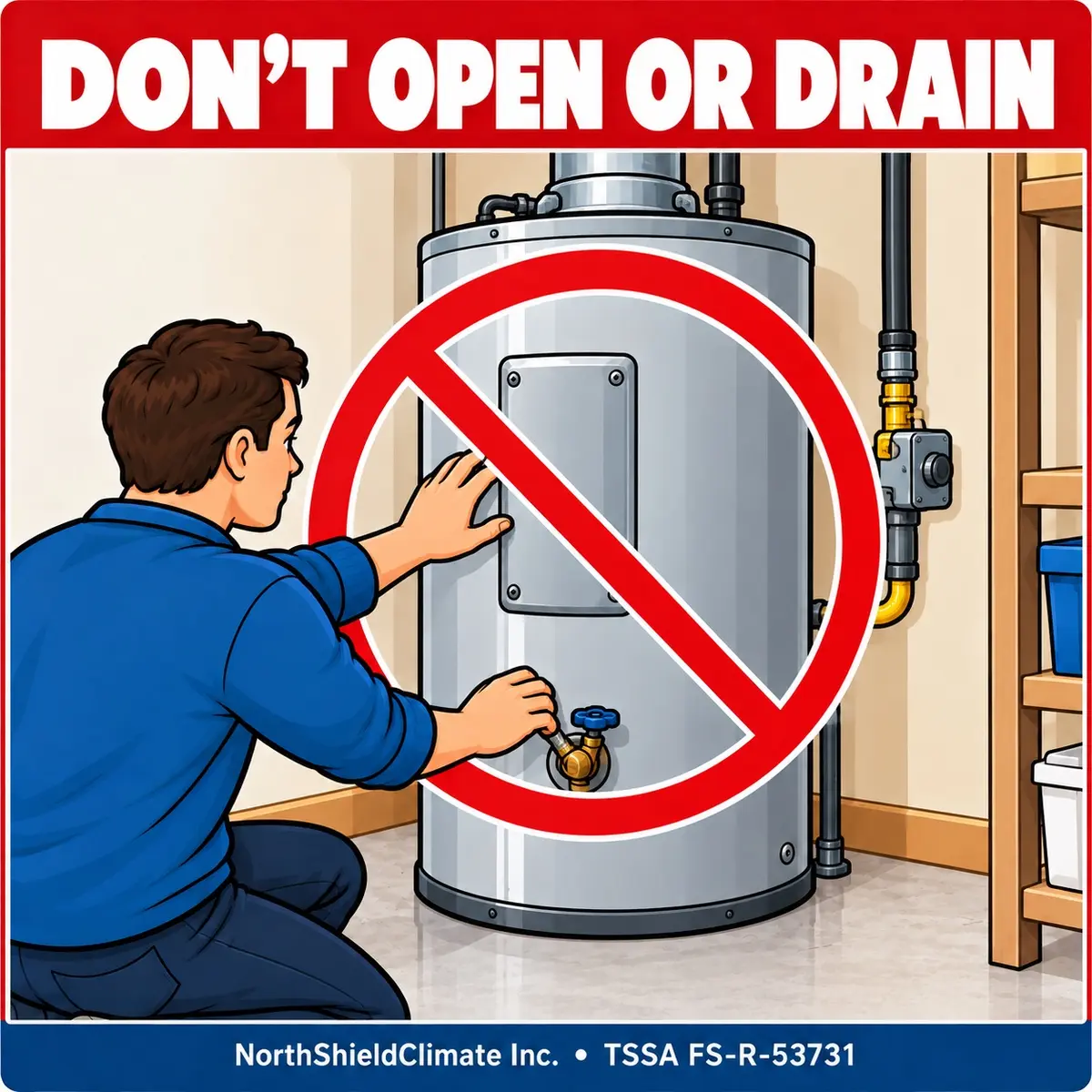
Flushing and anode inspection can be valuable preventive maintenance, but the correct procedure and interval depend on the appliance instructions, water quality, installation and tank condition. An older or corroded tank may begin leaking after it is disturbed. Schedule these tasks as planned maintenance rather than improvising them during a no-hot-water call.
Follow the manufacturer’s operating and maintenance instructions. Enbridge Gas also advises regular maintenance by a certified heating contractor and keeping a gas water heater’s lower air intakes free of dust, lint and debris. Enbridge Gas water-heating safety · Natural-gas appliance safety